
About Rachel Wilson, LCSW, C-IAYT
Somatic Trauma Therapist in Oakland, CA
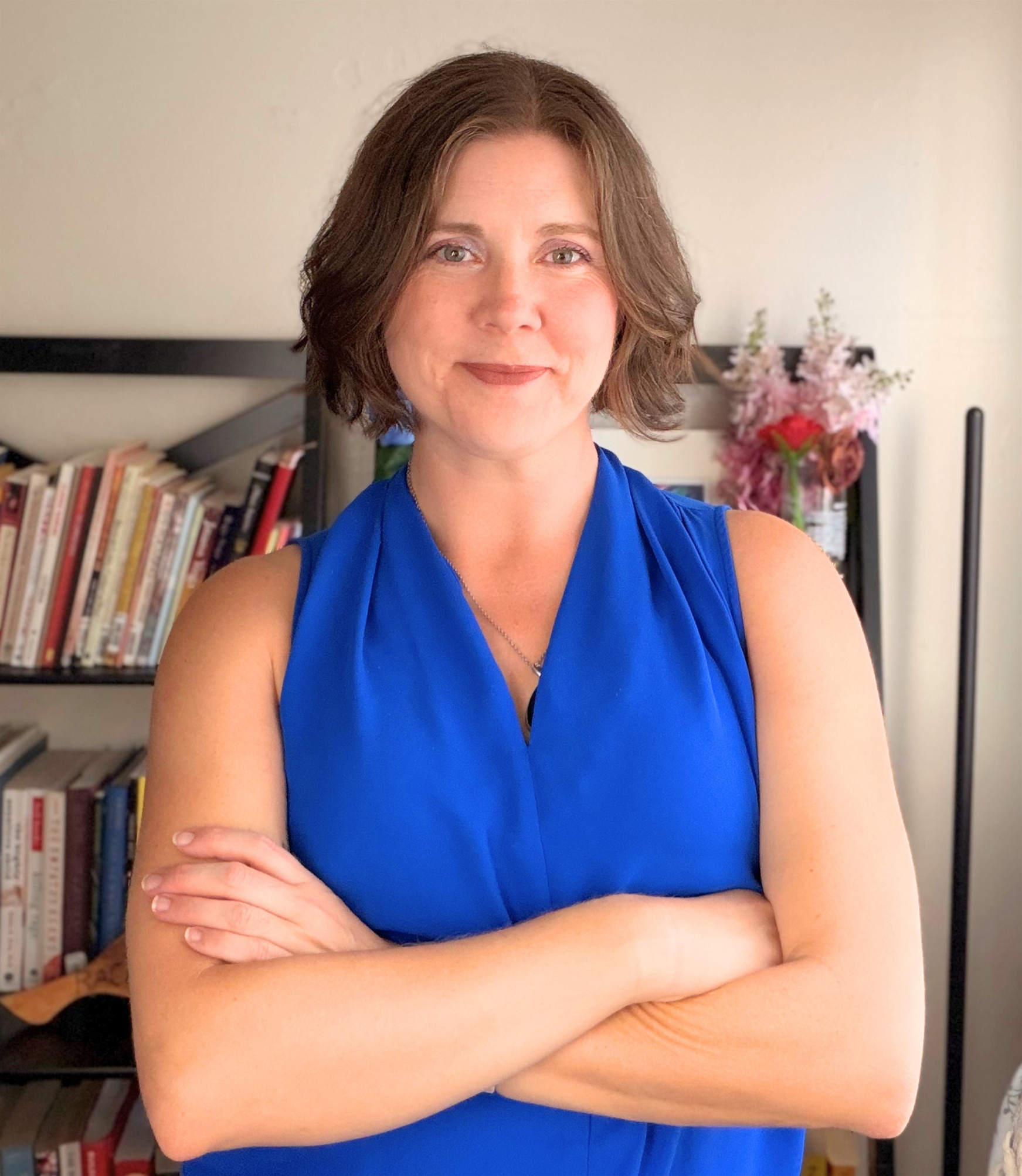
I'm not going to coddle you.
The world pulls your attention in a hundred directions. Therapy with me is one hour a week that's actually yours. I want to be able to witness pain and suffering, personal and collective, in a way that lets transformation happen, so you don't have to be alone in it.
But this work doesn't have to be all doom and gloom. It's also about coming back to presence, to your body, to joy. Laughing is an important part of therapy too.
My work has taken me into spaces where a lot of people get overwhelmed: juvenile halls, the foster care system, schools, and community organizations, alongside people carrying intense personal and collective trauma. I've learned how to stay present with a lot, and how to help it move.
What I've learned in those spaces is that people don't change because someone agrees with them. They change when someone is honest with them and stays. So if you've been in therapy where you felt heard and validated but nothing actually changed, I get it. Validation matters, but it's not the whole job. I'm not going to waste your time telling you what you want to hear.
Who I work with
You're probably sensitive, even if most people wouldn't guess it. You feel things deeply and notice what other people miss, but you learned a long time ago to keep that protected. Maybe you come across as tough, guarded, or like you've got it all handled. That armor made sense. It kept you safe. It's also exhausting to carry, and it makes it hard to let anyone all the way in.
And you've probably been through some real things. You don't need someone to tell you to look on the bright side, practice more gratitude, or think more positively. You need someone who can hold the whole story and still help you get somewhere.
I don't think you're fragile. I don't feel sorry for you, and I'm not here to save you. What you've been through doesn't make you less capable. It means you've been surviving, living, and building a life for yourself. In my work, I want to help you find more choice over where you put your time and energy in that life without losing yourself.
How I work
I'm direct. I'll tell you what I see, and I'll ask you to show up for the work. That doesn't mean pushing you past what your body can handle. Pacing matters, and a lot of trauma work is learning to slow down. But going slowly isn't the same as going nowhere, and I'm not interested in keeping you comfortable in patterns that are hurting you.
Most of what I do is happening at once, but it breaks down roughly like this.
Safety comes first. If you've been disconnected from your body for a long time, we don't just dive in. We build your capacity to be there without it being overwhelming. That's the nervous system work, and it's where my training as a yoga therapist comes in: breath, movement, releasing tension, small practices you can actually use. We come to understand your patterns of survival, and then shift them at a pace your body can hold.
I look under the words. I notice when what you're saying and what's happening in your body don't match. A lot of us are brilliant at intellectualizing: explaining away our own behavior, explaining away someone else's, explaining away what we feel instead of being with it. I'll cut through that. Not aggressively, but I'm more interested in what's actually happening in you than in a tidy account of it.
Your patterns are intelligent. The way your mind and body react is your system keeping you safe, often under conditions that weren't safe. That's not a flaw in you. When we only analyze these patterns, people start to identify with them, and that leaves them feeling stuck. I want the shame out and your choices back. You won't control everything in your life, nobody does, but you can have real choice where it's actually yours.
We work with what happens between us. Your relational and attachment patterns won't just get described in here, they'll show up in the room. That's useful. We work with them live, notice how the past arrives in the present, and build something different that you can take into your relationships. A lot of people I work with feel deeply lonely even when they are surrounded by people. The goal is for you to show up more fully as yourself, stop abandoning yourself, and build relationships with real mutual care and respect.
Energy is practical, not woo. If you're sensitive and feel things deeply, other people's emotions and sensory overload shape your whole day, and you can't think your way out of that. So we pay attention to your energy: what depletes it, who depletes it, how resourced you actually are. Small shifts can help you feel more like yourself again and have more energy for the things you care about without having to deeply analyze the relationships with your parents.
The world is in the room too. Racism, sexism, religion, class, the culture you grew up inside: these shape what you believe about who you are. They also shape your actual reality, what you have access to, and the power dynamics you have to navigate at work, at home, and everywhere else. So does intergenerational and ancestral trauma, the things we carry that didn't start with us. I'm not going to pretend you can think your way past oppression or simply choose to rise above it. Therapy doesn't fix the world. What we can do is name what's real, see what was handed to you, and figure out how you want to move through it.
Why I do this
I came to this work looking for my own healing from complex trauma. As a highly sensitive person, I spent a long time not being believed. I'd pick up on something real, and people would talk me out of it: out of my feelings, out of what I was sensing, out of my own experience. I know how disorienting that is. In my office, what you notice counts.
What keeps me here is my clients. I get to sit with people who have been through so much and are still remarkable: reconnecting to their humanity, showing up for themselves and the people they love, and doing amazing things in the world. I'm inspired by that every day.
Along the way, I've learned that healing happens in relationship, it happens in the body, and it's political. I'm currently deepening that understanding through training in liberation psychology, and I bring all of it into the room with me.
Training: Licensed Clinical Social Worker (CA, MN) · Certified Yoga Therapist (C-IAYT) · Integrative Somatic Trauma Therapy · Somatic Attachment Therapy · currently studying liberation psychology
Working together
I see clients in person in Oakland and online across California and Minnesota. Sessions are $300 for 50 minutes, and I usually meet weekly with new clients for at least the first three months.
I also hold two reduced-fee spots for teachers, organizers, and people doing community work. They're limited, so if that's you, ask about them when we talk.